
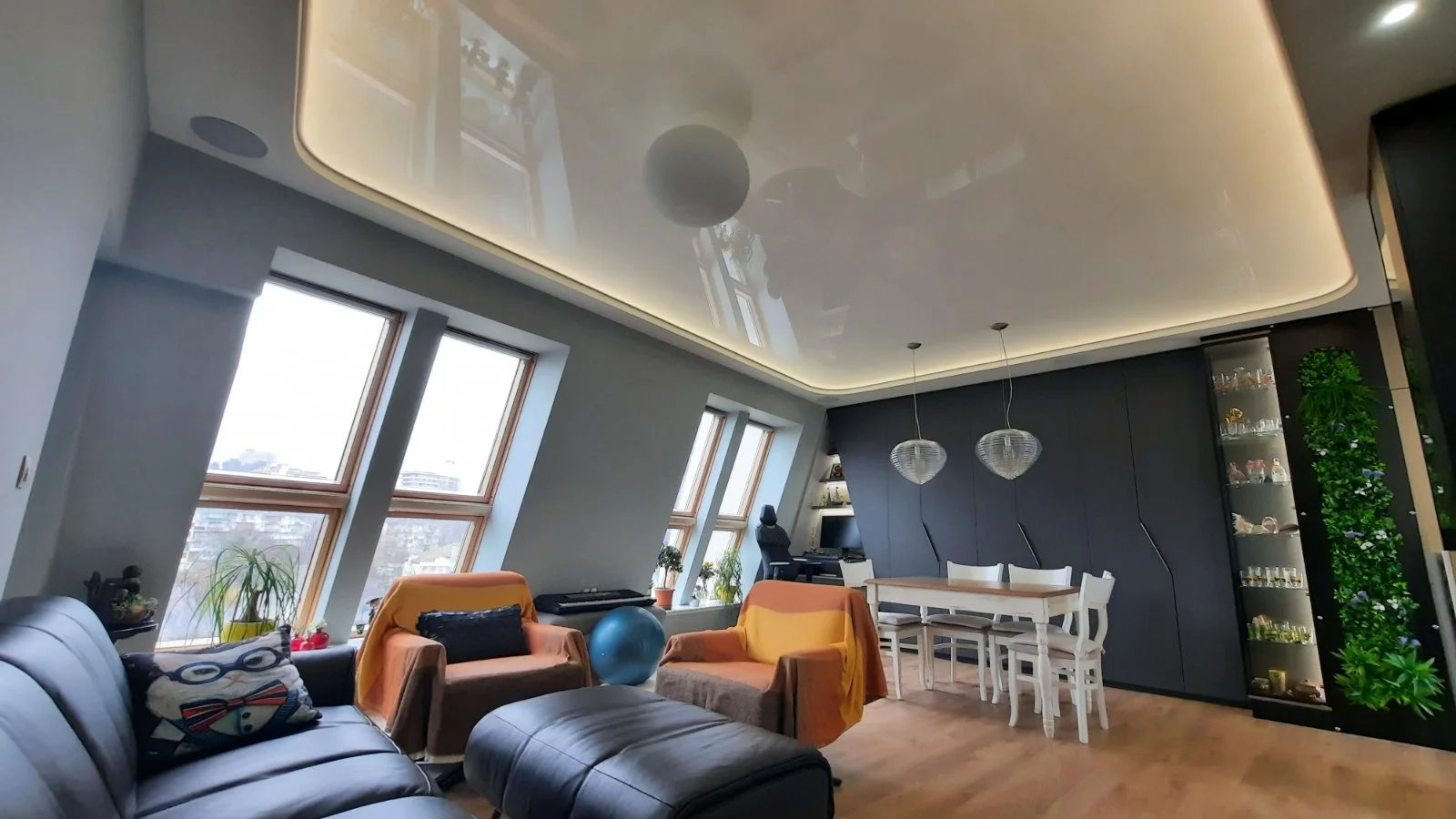
PVC stretch ceilings
shine and style
Mirror finish
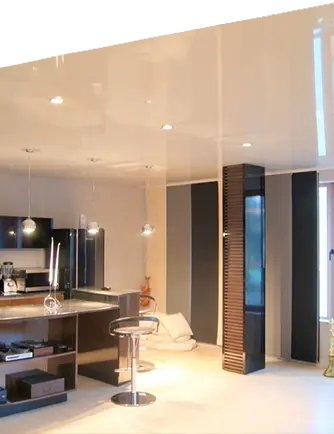
Hot installation
with
a lacquered finish
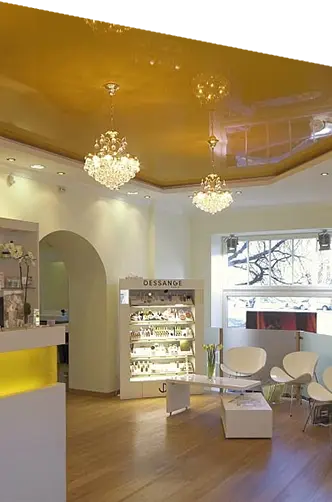
A modernist style
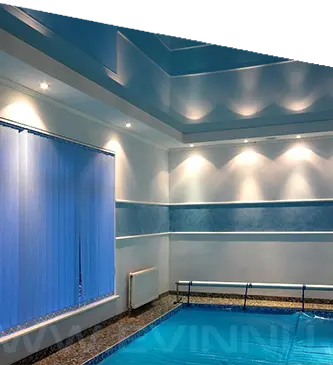
Online
order
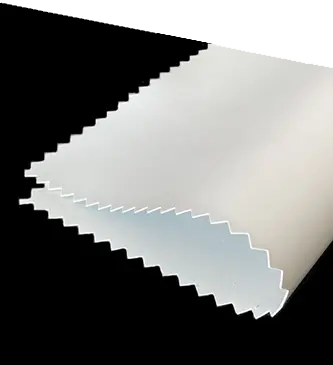
Mirror finish
With its perfectly smooth and elegant finish, the PVC stretch ceiling maintains a polished appearance and truly enhances the look of your ceilings. It transforms the entire room all on its own.
Hot installation
with a lacquered finish
Thanks to the heat, the fabric becomes stretchy and malleable, adapting to all shapes and sizes, even the most complex ones. This flexibility ensures even tension without visible creases or seams. The result is a custom-fit ceiling that perfectly contours every detail of your space.
A modernist style
The heat stretch ceiling offers several textures and finishes, from matte to glossy, to suit all interior styles. It brings modernity and elegance, whether in a home or a professional space. Create the atmosphere that suits you!
Online
order
Through our online shop, you can access our full range of stretch ceiling and stretch wall canvas products (acoustic, printed or backlit), whether you wish to have them installed by a professional or fit them by yourself. View the full technical specifications, including our detailed installation guides, and place your order whether you’re a DIY enthusiast or a professional installer.
SWALline™
What is a heat-stretched stretch ceiling, and what are its advantages?
This type of stretch ceiling offers a sleek finish that is ideal for even the most demanding projects.
PVC membrane stretch ceilings are installed using heat: this is known as a heat-applied stretch ceiling, a solution that involves installing a stretchable PVC membrane beneath the existing ceiling. When heated during installation, the membrane becomes pliable, allowing it to be stretched perfectly and creating a smooth, uniform surface.
This method relies on the use of a heat-shrinkable fabric that returns to its original shape as it cools. Thanks to this shape-memory property, the final finish is completely smooth. The hot-stretched ceiling also differs from the cold-stretched ceiling in its varied finishes, particularly glossy or lacquered options, which add a modern or even futuristic touch to interiors.
Suitable for both renovation and new construction projects, it delivers an immediate aesthetic result without major construction work or mess. It’s a quick, clean, and effective solution for transforming an interior.
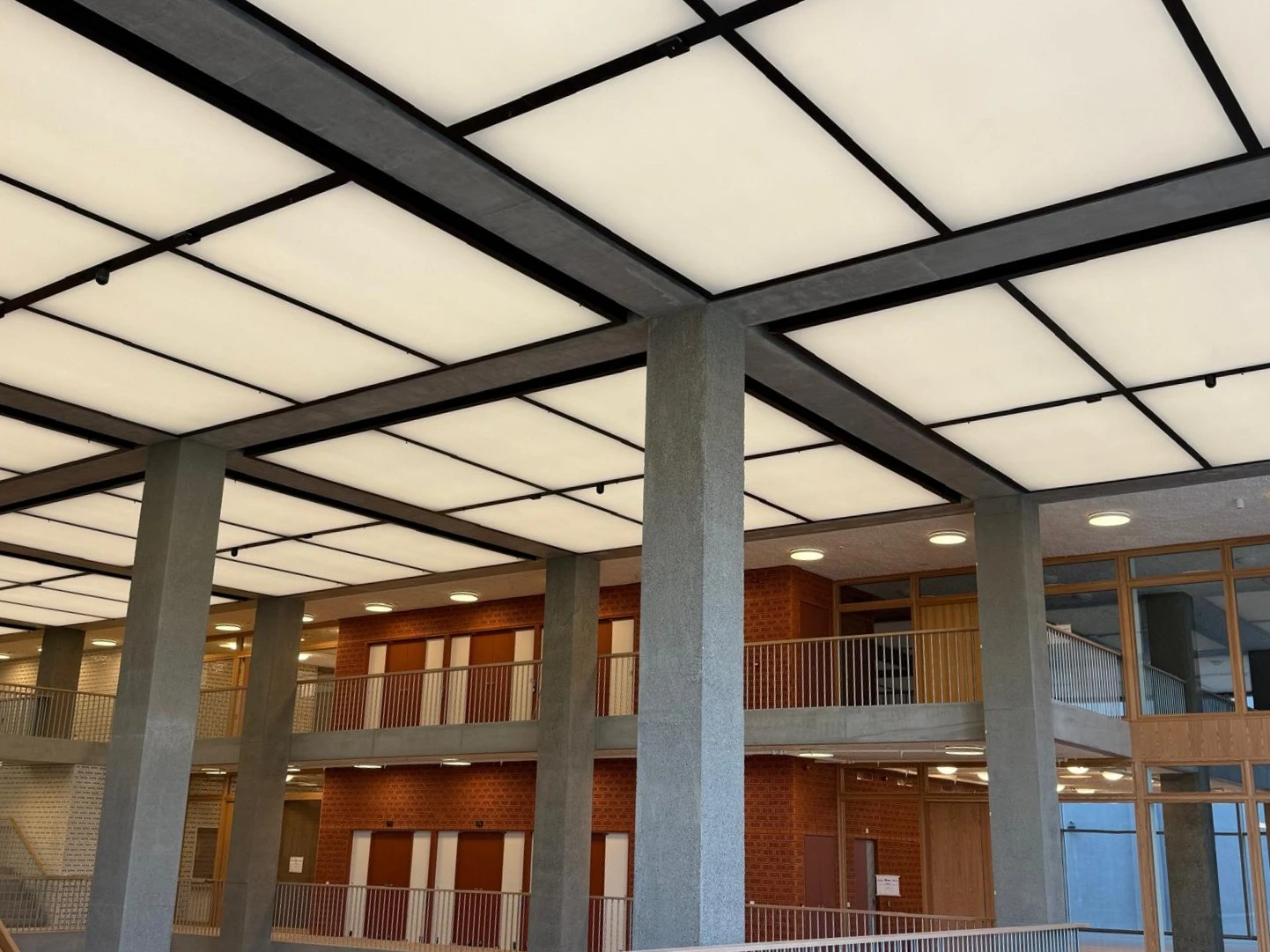
Heat-formed stretch ceilings
enhance interiors
washable with water Finishes
glossy or lacquered High resistance
to moisture
SWALline™
Hot and cold installation: understanding the differences and key points for making the right choice
There are two main techniques for installing a stretch ceiling : hot installation and cold installation. Both methods are based on the same principle, which is to stretch a fabric under an existing ceiling, but they use different materials and processes, which affects the final result.
A heat-stretched ceiling uses a PVC membrane that is heated during installation. The heat makes the membrane stretch, and it returns to its original tension as it cools. This process results in a perfectly taut surface, free of wrinkles or imperfections, with a uniform finish. It also allows for glossy or lacquered finishes, which are highly sought after for their modern aesthetic.
The principle behind cold-installed stretch ceiling is based on a PVC-free, tensioned fabric. This method is quick and easy to install and is suitable for many environments, particularly those where the use of heat must be minimized. It offers a contemporary look with matte finishes that are perfectly suited to more natural, understated settings.
Heat-stretched ceilings can be enhanced with options that improve both their appearance and performance.
To improve acoustic comfort, micro-perforated fabrics can be used. These fabrics are made with small perforations that allow sound to pass through. The sound then enters the plenum (the space between the original ceiling and the stretched fabric), where it is absorbed. This reduces reverberation and improves the room’s sound quality.
Heat-stretched ceilings can also be customized using high-definition printing. This technique allows images, patterns, or logos to be printed directly onto the fabric, offering great creative freedom. This makes it possible to create unique interiors.
Backlighting radically transforms the atmosphere of a room. By incorporating a lighting system behind the stretched fabric, the ceiling becomes an extra-large source of diffused light. This type of lighting highlights the stretched surface, and you can, of course, choose the color temperature or brightness. The entire system can be controlled using a dedicated console or a remote control.
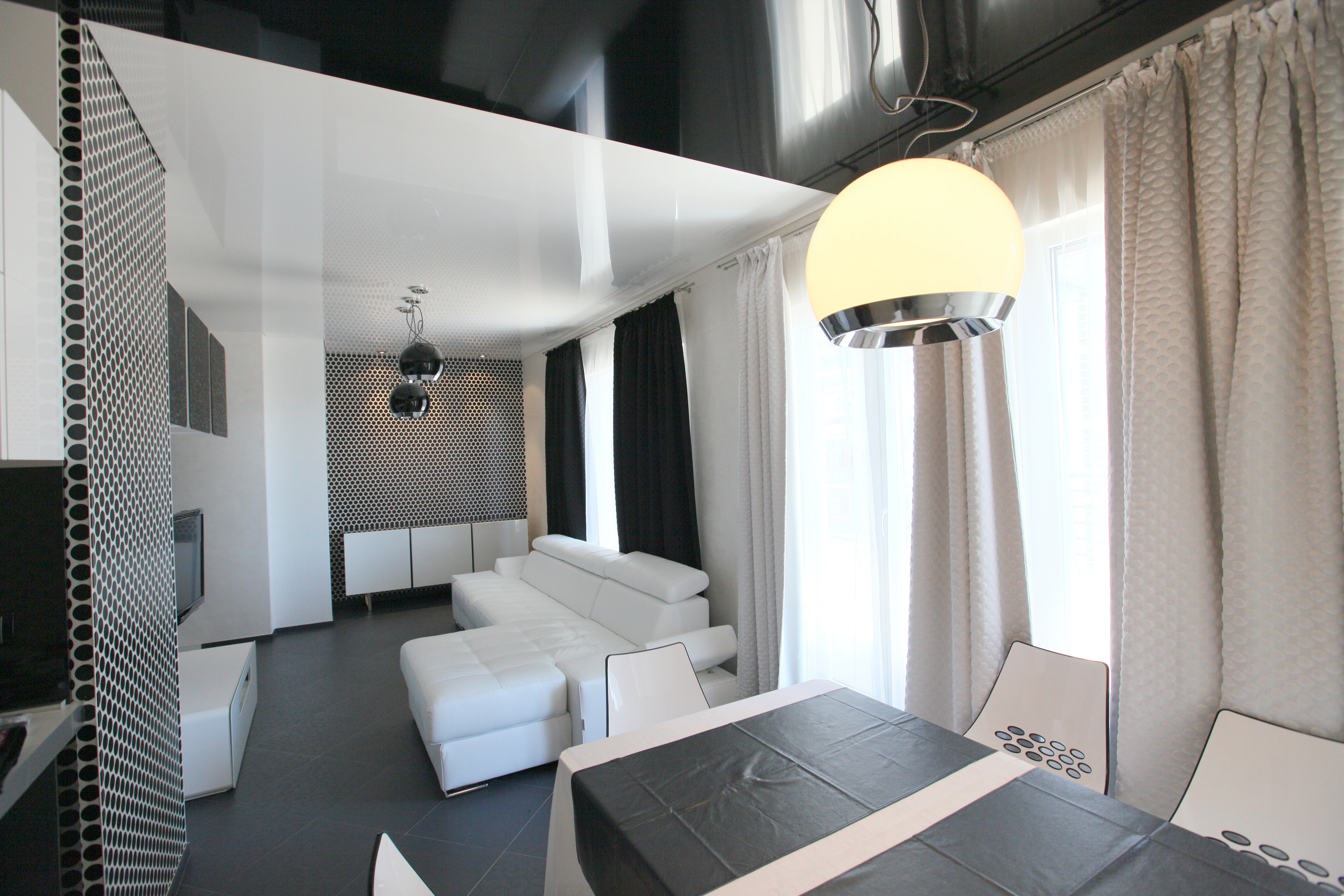
Heat-formed stretch ceilings
can be customized to match any desired design
The SWALline™ covering can be removed and then retensioned,
which makes it easier to make adjustments or perform technical work.
The installation of a heat-stretched ceiling involves a process that uses heat to stretch the fabric. First, mounting profiles are installed on the walls or ceiling around the perimeter of the room.
The PVC fabric is heated to approximately 50°C to make it stretchy and pliable. This step allows the fabric to stretch and conform to the surface. Once heated and smoothed out, the fabric is pulled and secured to the SWAL™ clamp profiles and gradually tensioned using the same process as cold-applied membrane installation.
As it cools, the PVC membrane returns to its original shape thanks to its shape memory, ensuring a perfectly smooth, taut surface. This technique delivers a flawless finish, even on large surfaces or complex shapes.
As with all stretch ceilings, the installation of a heat-applied stretch ceiling is quick and clean, with little dust or debris. However, the room must be temporarily heated to a high temperature during installation, which requires that occupants be absent or evacuated during this phase.
SWALline™
The integration of technical components
into a heat-stretched ceiling.
Heat-formed stretch ceilings offer great flexibility for incorporating technical components. Special substructures are installed on the original ceiling beforehand.
Thanks to these specially designed substructures, it is possible to integrate recessed spotlights, pendant lights, or ventilation systems, while ensuring that the fabric is properly tensioned.
Would you like to install a heat-applied PVC membrane ceiling yourself ? These techniques are detailed in our installation tutorials, which guide you step by step through the process, as it is entirely possible to install a stretch ceiling on your own.
This ability to combine technical features with flawless aesthetics makes the hot-stretched ceiling a preferred solution for offices, retail spaces, hotels, and public areas.
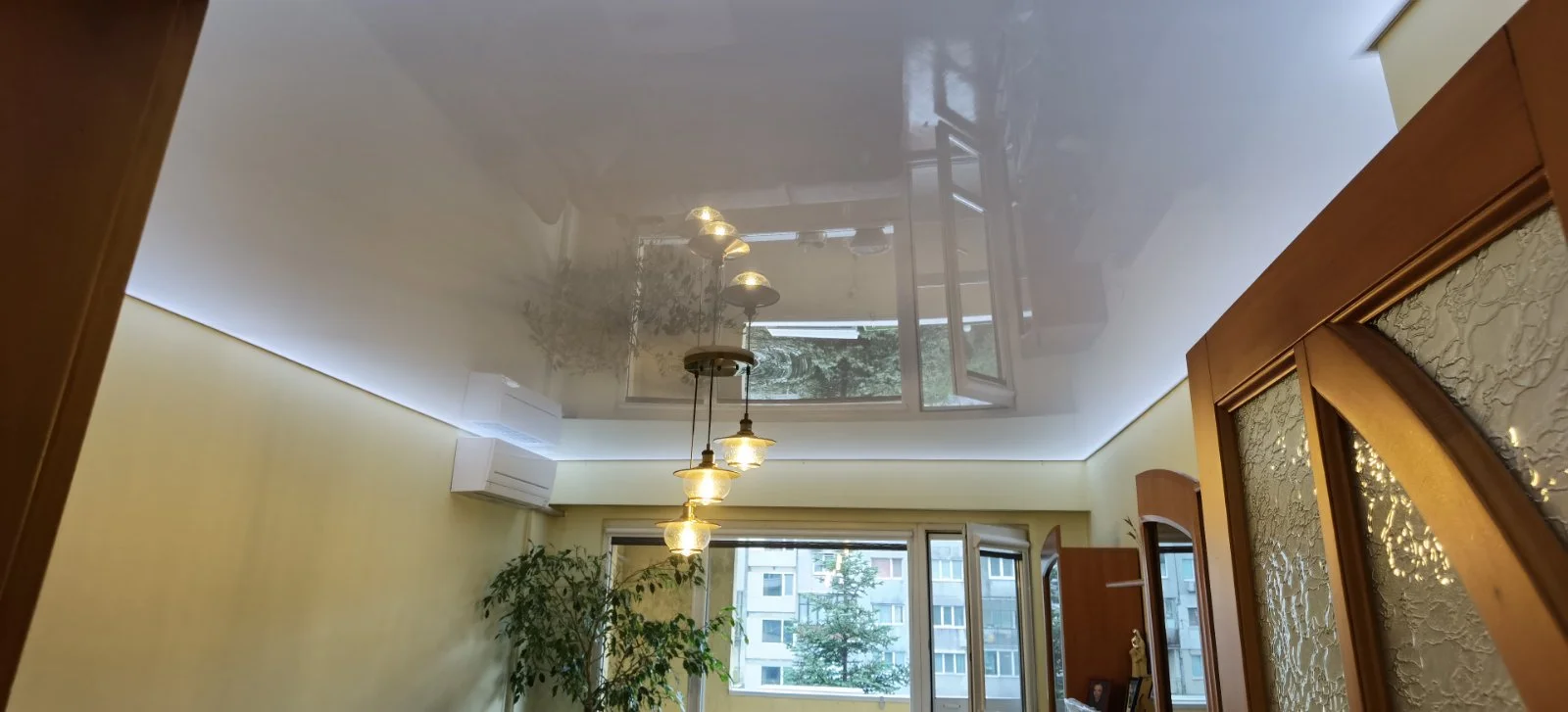
Heat-applied PVC linings
are what we think of as a stretch ceiling
thanks to heat Suitable for large spaces
and complex shapes Easy maintenance and long-lasting
over time
SWALline™
Understanding the cost of a heat-stretched ceiling: budget and key factors for estimating your project.
The cost of a heat-stretched ceiling depends on several factors, including the surface area to be covered, the complexity of the ceiling, the type of finish chosen (glossy, matte, lacquered), and the possible integration of technical elements such as spotlights or access panels.
The price per square meter is generally between 80 and 110 euros, including installation. This rate reflects the quality of the materials used, the technical complexity of the installation, and the expertise required to ensure a flawless finish.
To obtain a personalized quote tailored to your project, please do not hesitate to contact us. Our experts will help you choose the solutions best suited to your needs and budget.
Frequently Asked Questions
A heat-stretched ceiling is designed to last a long time. Its average lifespan is between 15 and 25 years, but it can be longer if the ceiling is well maintained and used under normal conditions. The PVC fabric used is resistant to deformation, temperature variations, and UV rays, allowing it to retain its taut and uniform appearance for many years.
Thanks to its PVC film composition, heat-stretched ceilings are very easy to maintain in good condition. In general, thorough cleaning is recommended every 6 to 7 years in rooms exposed to humidity, and every 8 to 10 years in other rooms. To do this, use a microfiber cloth slightly dampened with water and a mild plastic-compatible product, such as window cleaner. After cleaning the surface, be sure to rinse thoroughly with clean water to avoid streaks. And if you need to treat a specific stain, it is best to clean around it with broad strokes to avoid a visible contrast between the cleaned area and the rest of the ceiling.
Yes, SWAL™ heat-stretched ceilings are designed to meet strict fire safety standards. They are Euroclass Bs2d0 certified, which means they offer excellent fire resistance, limiting the spread of flames and the production of toxic fumes. This certification guarantees that our ceilings can be safely installed in public, professional, or residential environments, while complying with current regulatory requirements.
In summary...
| Feature/Benefit | Detailed description |
|---|---|
| Coating material | PVC film (thermo-shrink vinyl membrane). |
| Installation method | Hot (room heated to ~40°C), the fabric is attached to profiles and stretches perfectly as it cools. |
| Surface finish | Wide variety of finishes: glossy, lacquered, mirror effect (available in 40 colors). |
| Width | Widths are more limited than cold installation, sometimes requiring discreet welding for very large surfaces. |
| Waterproofing | Fully waterproof, providing protection in case of water damage (retains water without damaging the room). |
| Applications | Ideal for modern design, mirror effect, and wet rooms (bathrooms, kitchens). |
| Options/Features | Antimicrobial, very durable, with shape memory. |